When people think about wildfire, they picture flames racing across a hillside. But a great many homes are lost not to the main fire front but to embers: small burning pieces that travel on the wind, land on a roof and find somewhere to settle. In a state where wildfire season keeps getting longer, the roof is one of the first places to think about when planning a replacement.
If you are planning roof replacemenets in Martinez, the material you choose and the way the roof is built can make a real difference to how it holds up if embers land on it. Here is what the University of California’s fire experts say to look at.
Why the Roof Is Vulnerable
The UC ANR Fire Network covers this on its roof page, which was last updated in August 2026. It says the roof’s large surface area can make it extremely vulnerable to embers during a fire, and that debris collects at roof-wall intersections, edges, skylights and vents.
Where Roofs Actually Ignite
The page puts it plainly: roofs generally ignite at edges and intersections, so those areas should be prioritized. Dormers and split-level designs add extra roof-to-wall intersections. For those, it recommends fire-rated gypsum underlayment and metal flashing, and it says valleys can be protected with metal flashing or by interweaving Class A asphalt shingles.
What the Ratings Mean
Roof coverings are rated Class A, B or C. According to the page, the ratings cover how well the covering resists fire entering the attic, how far flames spread across the covering, and how many embers it produces. In its words, Class A roofs provide the greatest protection, while Class C roofs provide the least.
Materials That Earn the Top Rating
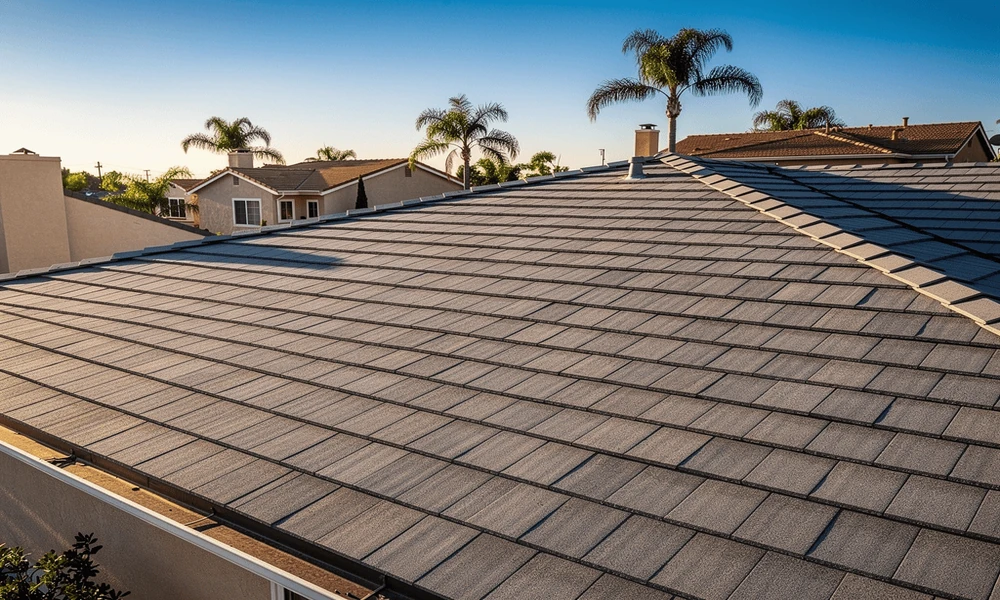
The page lists flat or barrel-shaped tile, fiberglass asphalt shingles and metal roofs as Class A. It adds that Class B coverings, such as fire-retardant treated shakes, and Class C coverings, such as recycled plastic, rubber and aluminum, can often reach Class A when extra underlayment is added. Untreated wood shakes are unrated and should not be used in wildfire-prone areas.
Gutters, Vents and Skylights
A roof is more than its covering. The page advises keeping gutters free of debris and checking their edges for gaps between the covering and the sheathing. It calls vents highly vulnerable to ember intrusion and points readers to a separate section on them. For skylights, it says to keep them shut during a wildfire, clear the area around them of debris and trim overhanging branches.
Solar Panels on the Roof
For homes with solar, the page says properly installed panels do not raise fire risk, but debris underneath them can. Regular cleaning and roof upkeep reduce that risk.
What California Requires
The page notes that Chapter 7A of the California Building Code requires roof coverings that keep out flames and embers, and that local rules may add requirements. Which rules apply to your address depends on where it sits, so confirm with your city or county building department before you choose a material.
Maintenance Matters as Much as the Material
The most repeated advice on the page is regular debris removal. Clear gutters, valleys, skylights and the space under solar panels, and repair damaged roof-wall intersections. A Class A roof buried in dry leaves and pine needles is not performing the way it was designed to.
Questions for Your Roofer
These suggestions are general advice that follows from the page and are not quoted from it. Ask which fire rating each material you are considering carries, and whether the whole assembly, including underlayment, flashing and vents, meets that rating. Ask how the edges, valleys and intersections will be detailed, and ask for the answers in the written estimate.